December 2025 Christmas Bird Count Reflections

This year’s Christmas Bird Count (CBC) marks 126 years of this winter bird census in the western hemisphere. The project has grown to include not only portions of the northern hemisphere reaching as far north as the Arctic Bay in Canada, but also as far south as the Drake Passage in South America. This monumental community science annual inventory creates a 24-hr. snapshot of resident winter bird populations. Locally, the Weminuche Audubon Society chapter has hosted annual counts for the last 15 years. 

With open water and largely bare ground, 74 birders fanned out to cover a 15-mile diameter circle on December 14th. The conditions were oddly warm for “a winter’s day” with highs in the mid-50s. The overwhelming sentiment from the group was that bird numbers seemed notably low. Participants tallied 71 species in the field and at feeders for a total bird count of 4,453 birds. A closer look at the dataset reveals that though we had the 2nd highest species count in the past five years (highest being 78 in 2024), our total number of birds was the 3rd lowest and down about 1600 birds overall from last year. Concerning? Yes, especially when you look at the national numbers which indicate a continued downward trend and loss of overall birds throughout the northern and southern hemispheres, despite increased CBC participation. These findings are most noticeable since the year 2014, when total bird numbers registered 20 plus million more birds overall than are counted today across the sampled area. Long-standing data trends continue to reflect impacts from climate change equating to birds shifting their winter ranges to the north. 

Let’s look closer at the numbers locally. Open water naturally equated to some species of waterfowl lingering longer than normal and even to finding some species that we haven’t observed for several years such as canvasbacks. With open water on water bodies like Echo Lake, the species with the highest count was the American coot, a little known semi-aquatic rail species that often behaves like waterfowl, tallying 467 (up from 167 last year). In December of 2024 we found American robins seemingly everywhere and counted 452.  This year we found 1.  Townsend’s solitaire numbers also took a dive from 30 to 5.  Both of these thrush species rely on berries, including those of juniper, for winter food.  Lewis’s woodpecker and red crossbill numbers were also way down, likely a response to diminished food (acorns and pine nuts) availability this winter. A common question from observers across our count circle was “Where are all of the dark-eyed juncos?”  The number of these altitudinal forest migrants dropped from 383 to 45, likely a response to food access at higher elevations with a lower-than-average snowpack. The impacts of October’s notable flood event directly impacted numbers of birds on the San Juan River. To note, numbers of Common mergansers, dependent on fish fry, and goldeneye sp., dependent on aquatic macroinvertebrate, were notably down when compared to 5-year totals. 

On a positive note, both pygmy and white-breasted nuthatch numbers increased over those of 2024. Our mild temperatures found lots of fat prairie dogs out and about, food for watchful raptors. Participants tallied 9 golden eagles, 17 bald eagles, 38 red-tailed hawks, 1 Cooper’s hawk, 2 sharp-shinned hawks, 3 ferruginous hawks, and a prairie falcon across the 8 zones for the CBC. An exciting discovery, two northern pygmy owls were spotted on count day, and 1 great-horned owl was identified during count week. While previously only seen during count week, a white-winged dove was spotted on count day. 

We would like to extend our thanks to the volunteers that got out to log birds for the count. Also, many thanks to the landowners that allowed us passage on private lands to view birds, allowing for a more rounded and accurate count.

Searching for the Mexican Spotted Owl

Suitable habitat and past detections suggest that Mexican Spotted Owls (MSOs) could be breeding in remote terrain of the HD Mountains in SW Colorado. But are the birds there? MSOs are protected under the Endangered Species Act (ESA) and their numbers are limited by suitable nesting habitat. Their historic range is shrinking as a result of disturbances including timber removal practices, wildfire, and oil and gas development. Can you find a bird who hunts at dusk and at night, roosts during the day and is most vocal during breeding season when snowfall limits access?

Mexican Spotted Owl, Navajo Nation. Photo by Sean Kite/Audubon Photography Awards


Forming a partnership with San Juan Citizens Alliance and members of the Fort Lewis College SEEDS Ecology club, members of Weminuche Audubon Society (WAS) alongside Audubon Rockies staff, set out to answer this question last winter and spring. Thanks to a grant from Denver Audubon’s Lois Webster Fund and individual donations, WAS was able to purchase Autonomous Recording Units (ARUs) from Cornell Lab of Ornithology’s K. Lisa Yang’s Center for Conservation Bioacoustics, a relatively new technology used to record the unique calls of birds. When used in tandem with Raven Pro software to effectively scan thru hours of auditory data in a condensed amount of time, this system is capable of passive and remote animal detection in areas often found to be “inaccessible”. In this case, we were hoping to locate MSOs during their most vocal months in the depths of the San Juan National Forest.


After adjusting recording settings on the ARUs, camouflaging the units for protection in the field, and determining suitable locations for placement, project volunteers set out on snowshoes to install the units in late winter 2023. Each month, team members returned to retrieve SD cards, refresh the units with batteries and new SD cards, and ensure further recordings for the months to come.

Fort Lewis College SEEDS club members strap an ARU to a tree in the HD Mtns. Photo by Keith Bruno.

Though the project found no definitive vocalizations for MSOs, there were several indirect gains from going through the motions. Team members gained invaluable experience learning how to program, implement in the field, and analyze data from the use of ARUs. At the September WAS meeting, chapter member Kurt Huffman explained how the ARUs were used in our MSO Project, how the data captured by ARUs is analyzed and the exciting possibilities for future use. WAS volunteers have since installed these units in search of Pinyon Jays, as this species is in a steep rate of decline and a candidate for future ESA listings.

See the below link to learn more about how ARUs are being used for Conservation Biology:
www.allaboutbirds.org/news/what-does-conservation-sound-like/

Pagosa Wetland Partners

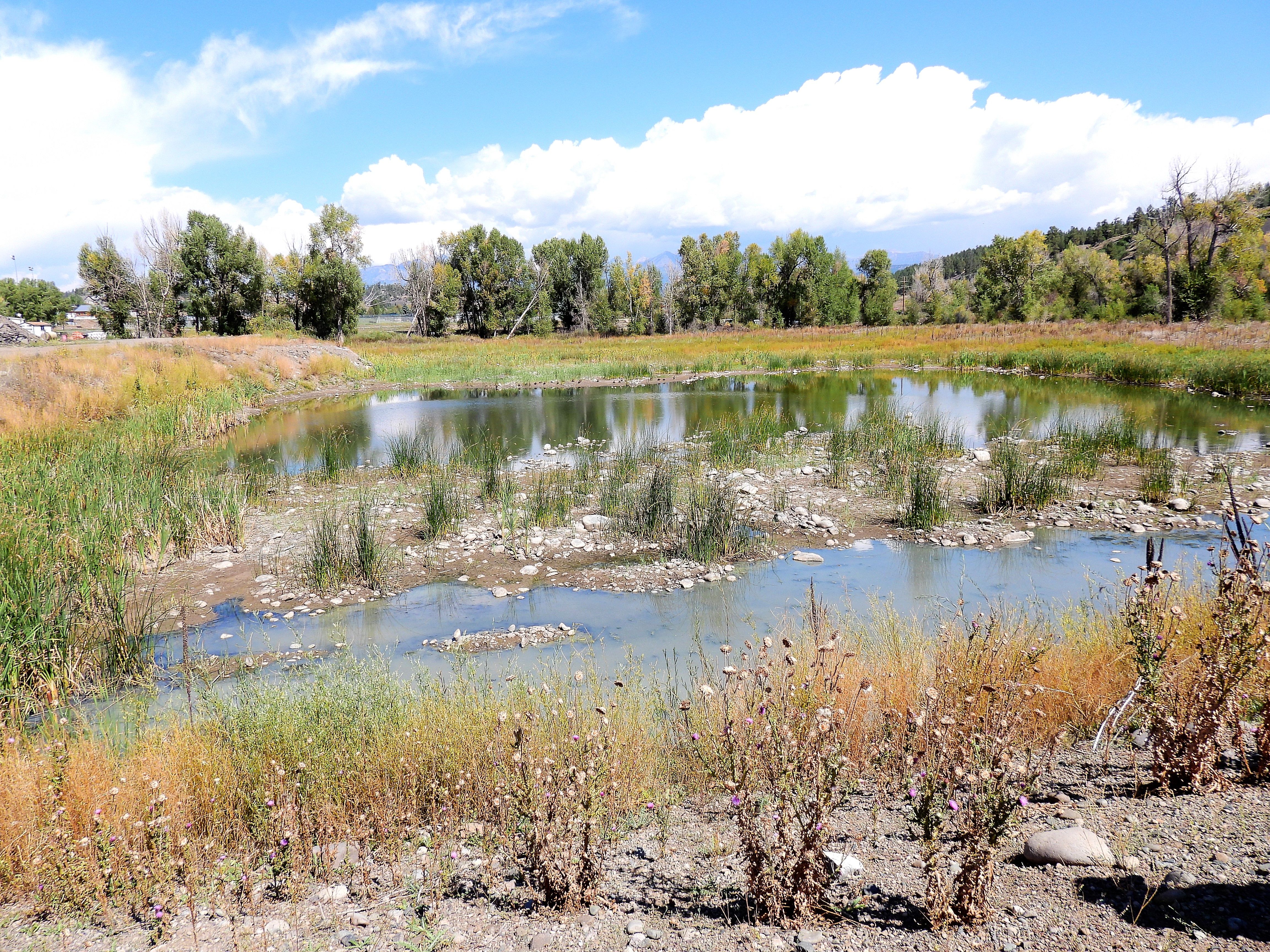
Pagosa Wetland Partners serves as a committee of the Weminuche Audubon Society. The primary mission of this group of dedicated volunteers is to protect and enhance the conservation wetlands along the Riverwalk in town.

To date, efforts of this group have included a presentation to the Town Council highlighting the importance of this habitat, several articles published in the local papers, research and reports on potential impacts to wetlands wildlife from artificial light and noise, meetings with adjacent landowners and town officials.

In the summer of 2021, several volunteers participated in naturalist training classes conducted by Randy McCormick. These volunteers have led well received educational naturalist tours to highlight the value of this important habitat. Locals and tourists have benefited from these tours, scheduled to go through September

You may contact this group at pagosawetlands@gmail.com and visit their Facebook page https://www.facebook.com/Pagosawetlands/

Weminuche Audubon Society Annual Meeting

The chapter annual meeting was held on Wednesday, August 19, at 6:00 PM via Zoom. We accomplished the mandates of our bylaws; to review the past year, present financial statements and conduct elections to the board of directors. Thanks to all who participated.

We had a good time building nest boxes in February. I call it Women with Power Tools. Peggy Andrews was unstoppable!

Marie Smith and Evan Tweedie, 2 of our scholarship recipients who attended Camp Colorado in 2019. This scholarship is made possible thanks to the generosity of Joan Ward in memory of her late husband, Michael Ward. Marie was set to attend again in 2020 until the Camp was cancelled due to Covid restrictions.

This annual field trip for Middle School fifth graders is led by Keith Bruno and chapter volunteers. This year it was more like Science on No Snow.

Our thanks to Brenda Breding, who serves as board secretary, for her hours of work re-designing our brochure. We are in our 3rd year of publishing Bird of the Week articles in the Pagosa Sun.

This spring our chapter was able to make a $400.00 donation to the Methodist Church Food Bank to support our community. These funds were accrued from the City Market Rewards program paid to our chapter. Please consider registering your value card and choosing Weminuche Audubon as your charity. Directions are on the home page of our website.

Treasurer Anne Stevens reported on the chapter financial income and expenses.

We were able to vote on Zoom. No additional nominations were presented and current board members were re-elected. We were pleased to add Randy McCormick to the board.

Invest in Wetlands

The Federal Duck Stamp, aka the Migratory Bird Hunting and Conservation Stamp, program is recognized as a good investment in the effort to conserve wildlife habitat.

Ninety-eight cents of every duck stamp dollar goes directly into the Migratory Bird Conservation Fund to  purchase or lease  wetlands and wildlife habitat for inclusion in the  National Wildlife Refuge System. This ensures there will be land for wildlife and humans that will be protected for generations to come.

These stamps are required purchase for waterfowl hunters, but this program is also supported by other people who recognize the value in protecting wetlands. There are several ways to purchase these stamps. Using this link, also supports Partners in Flight.

The American Dipper Project

American Dipper Nest, Cinclus mexicanus, Junction Creek, La Plata County, Durango, Colorado, USA, North America, Order Passeriformes, Family Cinclidae

The following article was provided by Stephen Monroe of Durango. Stephen obtained an Audubon grant through the Weminuche Audubon Society chapter to help fund expenses associated with this study.

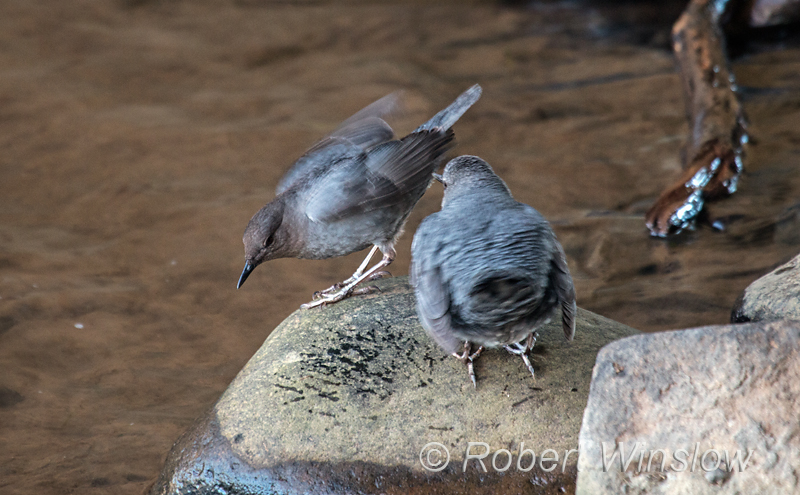
Two American Dippers, Cinclus mexicanus, Animas River, Durango, Colorado, USA, North America, Order Passeriformes, Family Cinclidae

Prior to 2016 relatively little was known about the Animas River’s American Dipper population. The Gold King Mine spill in 2015 raised concerns about the health of the American Dippers in the river, and a group of volunteers began to study the birds. The American Dipper Project was formed with the objective of studying the breeding success of American Dippers (Cinclus mexicanus) on the Animas River and other streams in southwestern Colorado. Each year from 2016 into 2020, volunteers have completed surveys annually, learning about nesting behavior and success, nest site fidelity, and the unique personalities of American Dippers. In 2018 a catastrophic wildfire burned portions of the Animas watershed, and subsequent flooding introduced large volumes of sediment to the river, potentially impacting American Dipper habitat and food sources.

Surveys to date have included sites in disturbed reaches of the Animas River as well as tributary streams that have not been affected by mining or fire. In 2020 we’ve begun to expand the project to the upper San Juan River near Pagosa Springs. Data collected during the first few years of this project have been entered into the NestWatch database (http://nestwatch.org) and will be shared soon.

In Spring of 2020 we discovered a nesting pair of dippers under a highway bridge over Hermosa Creek north of Durango. Hermosa Creek drains the watershed burned by the 416 Fire in 2018 and presence of nesting dippers was an encouraging sign of watershed recovery. We learned the Colorado Department of Transportation (CDOT) was planning a maintenance project on the bridge during the nesting period. We informed CDOT about the nesting dippers and consequently CDOT postponed the project. The American Dipper is protected by the federal Migratory Bird Treaty Act, which prohibits disturbance of active nests. In early June we observed two fledglings dipping and dancing on top of the nest, two nestlings watching from inside, and both parents singing on a nearby beach. A day later all four fledglings had left the nest and headed upstream. The bridge construction project will move forward during the month of June.

The Trump administration has recently threatened to dramatically undermine the Migratory Bird Treaty Act. Learn more about the proposed changes and help prevent weakening of the Act by commenting at http://www.audubon.org take action tab.

For additional information about the American Dipper Project and to be included in the volunteer participant list go to: birdmentor.com/dipper-project/

Or contact: Stephen Monroe at sm3662@gmail.com

Following are pdf files with survey protocols and data collection sheets which may be downloaded and printed for use in this survey.

2020 Bird Community Monitoring

Join Audubon’s Bird Survey

Smokey skies have often been an indication that the Forest Service is conducting prescribed burns in the forests near Pagosa Springs in an effort to prevent catastrophic wildfires that threaten our forests and homes. In addition to fire, mechanical thinning of the brush layer (mastication), and selective harvest of trees are preventative treatments employed to our forests.  These measures led members of the Weminuche Audubon Society to investigate the question of how these wildland fuel reduction treatments affect bird populations.

With input from the San Juan Forest Health Partnership, the US Forest Service and Mountain Studies Institute(MSI), and with the support of Audubon Rockies, Weminuche Audubon board members Herb Grover and Keith Bruno designed a citizen science project to involve Audubon chapter members in a Bird Community Monitoring Project in three areas of the San Juan National Forest.  In preparation for the study, Anthony Culpepper of MSI gave a presentation at the March chapter meeting in which he provided an overview of local forests and treatment methods being employed. In May, local teacher Chris Couch helped us improve our “birding by ear” skills.

Our study compared bird populations in three areas of the forest.  The site on Turkey Springs had been subjected to both recent prescribed fire and mastication.  In fact the site was burned immediately before the study commenced. The site on Fawn Gulch had been masticated in 2017 and the site on Jackson Mtn. had not been thinned or burned in the recent past.

Volunteers in the study worked in pairs to document bird species heard or seen in 6 minutes at each of 15 predetermined points in the study area.  Each team committed to visiting their assigned survey loops for 4 visits during June and the first part of July.  20 volunteers contributed more than 400 hours to the study, which additionally surveyed forest structure differences . 54 different bird species and over 900 birds were recorded. We found singing birds, nesting birds, flying birds and hiding birds. A detailed report of the study findings can be downloaded from our website, www.weminucheaudubon.org. Find out which birds were common to all sites and which were unique.

The Weminuche Audubon chapter is excited to participate in the study again this June. In preparation, we’ll be practicing how to identify birds by their song. Because we were unable to meet in April, Herb Grover created an informative video to recap this citizen science project which may be viewed on youtube at https://youtu.be/mfBiFN0gR6A . The chapter is indebted to Herb for the extraordinary work that he has put into this project.

 We are inviting all local birders to participate in this fun study and will be assigning teams in May.  Please contact the chapter at weminuche.audubon@gmail.com for more information and to volunteer.

Help Protect Greater Sage Grouse

Ten years ago, greater sage grouse populations were in such a state of decline that these birds were considered for protection under the Endangered Species Act. Thanks to the cooperative work of several public and private groups, management plans were adopted in 2015 that are based on science and protect the future of these birds and the more than 350 other species that depend on a healthy sagebrush ecosystem.

The Bureau of Land Management, which controls many of the sagebrush habitats, is considering changes to these Sage Grouse Conservation Plans that will weaken the current protections. For more information on this issue, and to Speak Up For Sage Grouse, visit http://audubon.org and choose the Take Action tab. Don’t delay, the comment deadline is Monday, April 6.

(Centrocercus urophasianus)

Wetlands Preservation Group

On Thursday, February 27, our Wetlands Preservation Group made a presentation to the Town Council on the importance of the wetlands areas along the Riverwalk in town. Over 150 different species of birds have been reported on ebird in this area and it is of vital importance to wildlife and people that the integrity of this area be preserved.

This presentation was the culmination of several months work and meetings by many chapter members and other interested citizens. Hours of research went into this project. We met with David Dronet who represents the Springs Resort, walked the property with him and learned from each other.

Indications were that the presentation was well received by the Town Council. We are grateful for the opportunity to express our concerns and look forward to working with the town to preserve our natural beauty. Our thanks to our supporters who made this meeting standing room only!

If you want to see a copy of the material presented, download the following pdf file.